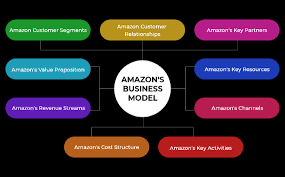
Inside Amazon.com: Business Model and Success Strategy
Introduction
Amazon.com is widely regarded as one of the most innovative and influential companies in the modern business world. From its beginnings as an online bookstore to its current position as a global leader in e-commerce, cloud computing, and digital services, Amazon has consistently redefined how businesses operate and how consumers shop.
At the heart of Amazon’s success lies a powerful business model and a carefully executed strategy that prioritizes long-term growth over short-term profits. The company’s ability to combine technology, logistics, and customer-centric thinking has enabled it to build a competitive advantage that few organizations can match.
This article explores the inner workings of Amazon’s business model and the strategies that have fueled its extraordinary success.
Amazon’s Core Business Model
Amazon operates on a multi-layered business model that integrates several revenue streams and services into a single ecosystem. Rather than relying on one source of income, the company has diversified its operations to create a stable and scalable structure.
At its core, Amazon’s business model includes:
- Direct retail sales
- Third-party marketplace services
- Subscription services
- Cloud computing
- Advertising
Each of these components plays a critical role in generating revenue and reinforcing Amazon’s market position.
Direct Retail Sales
Amazon’s original business model was based on selling products directly to consumers. The company purchases goods from manufacturers and sells them through its platform at competitive prices.
This model allows Amazon to control pricing, inventory, and customer experience. It also enables the company to offer exclusive deals and discounts, attracting price-sensitive customers.
While direct retail sales remain important, they have become just one part of Amazon’s broader ecosystem.
Marketplace Platform
One of Amazon’s most transformative innovations is its marketplace model, which allows third-party sellers to list and sell products on the platform.
This approach offers several advantages:
- Expands product selection without increasing inventory costs
- Generates revenue through commissions and fees
- Encourages price competition among sellers
The marketplace has grown to account for a significant portion of Amazon’s total sales. By acting as an intermediary, Amazon benefits from increased activity without taking on the full risks associated with inventory management.
Subscription Services
Amazon has successfully integrated subscription-based services into its business model, creating recurring revenue streams and strengthening customer loyalty.
The most notable example is Amazon Prime, which offers benefits such as:
- Fast and free shipping
- Access to streaming content
- Exclusive deals and discounts
Prime not only generates subscription revenue but also encourages members to shop more frequently, increasing overall sales.
Cloud Computing: AWS
Amazon Web Services (AWS) is one of the company’s most profitable divisions. Originally developed to support Amazon’s internal infrastructure, AWS has become a leading provider of cloud computing services.
AWS offers businesses scalable solutions for storage, computing power, and data analytics. Its clients range from startups to large enterprises and government organizations.
This segment provides high-margin revenue, helping to offset the lower margins in Amazon’s retail operations.
Advertising Revenue
Amazon has emerged as a major player in digital advertising. Brands and sellers pay to promote their products within Amazon’s platform, gaining visibility among millions of users.
This advertising model is highly effective because it targets consumers who are already in a purchasing mindset. As a result, it delivers strong conversion rates and generates significant revenue for Amazon.
Customer-Centric Strategy
One of the defining features of Amazon’s success is its unwavering focus on the customer. The company’s mission is to be “Earth’s most customer-centric company,” and this philosophy guides every decision it makes.
Amazon prioritizes:
- Convenience
- Low prices
- Wide selection
- Fast delivery
By consistently delivering value to customers, Amazon has built trust and loyalty on a global scale.
Personalization
Amazon uses advanced algorithms to personalize the shopping experience for each user. By analyzing browsing history, purchase behavior, and preferences, the platform recommends products tailored to individual needs.
This personalization increases customer satisfaction and drives higher sales by making it easier for users to discover relevant products.
Customer Reviews and Transparency
Amazon pioneered the use of customer reviews in e-commerce. These reviews provide valuable insights and help buyers make informed decisions.
Transparency builds trust, which is essential for online shopping. Customers are more likely to purchase products when they can see feedback from other users.
Pricing Strategy
Amazon’s pricing strategy is designed to attract and retain customers while maintaining competitiveness in the market.
Dynamic Pricing
Amazon uses dynamic pricing algorithms to adjust prices in real time based on factors such as demand, competition, and inventory levels.
This approach ensures that Amazon remains competitive while maximizing revenue.
Low-Margin Approach
Unlike many traditional retailers, Amazon operates on thin profit margins for its retail business. The company focuses on volume and long-term growth rather than short-term profitability.
By keeping prices low, Amazon attracts a large customer base and increases overall sales.
Logistics and Fulfillment Excellence
Amazon’s logistics network is a cornerstone of its success. The company has invested billions of dollars in building a sophisticated system that ensures fast and reliable delivery.
Fulfillment Centers
Amazon operates a vast network of fulfillment centers strategically located around the world. These facilities store products and process orders efficiently.
Automation and robotics play a key role in improving speed and accuracy.
Last-Mile Delivery
Amazon has developed its own delivery network to reduce reliance on third-party carriers. This includes delivery vans, local hubs, and independent contractors.
The company is also exploring innovative solutions such as drone delivery to further enhance efficiency.
Fulfillment by Amazon (FBA)
FBA allows third-party sellers to store their products in Amazon’s warehouses. Amazon handles packaging, shipping, and customer service.
This service simplifies logistics for sellers and ensures a consistent experience for customers.
Technology and Innovation
Technology is at the core of Amazon’s operations. The company continuously invests in innovation to improve efficiency and enhance the customer experience.
Artificial Intelligence and Machine Learning
Amazon uses AI and machine learning in various areas, including:
- Product recommendations
- Demand forecasting
- Fraud detection
- Customer service
These technologies enable Amazon to operate at scale while maintaining high levels of accuracy and efficiency.
Automation and Robotics
Automation has transformed Amazon’s fulfillment centers. Robots assist with tasks such as sorting, packing, and transporting goods.
This reduces operational costs and speeds up order processing.
Voice Technology
Amazon has entered the smart home market with voice-controlled devices. These products integrate with its ecosystem, allowing users to shop, control devices, and access services using voice commands.
Ecosystem Strategy
Amazon’s success is largely driven by its ecosystem approach. The company offers a wide range of interconnected services that reinforce each other.
For example:
- Prime members shop more frequently
- AWS supports Amazon’s infrastructure and external clients
- Advertising drives product visibility and sales
This interconnected system creates a powerful network effect, making it difficult for competitors to replicate Amazon’s model.
Global Expansion Strategy
Amazon has expanded its operations to numerous countries, adapting its strategies to local markets.
Localization
Amazon tailors its offerings to meet the preferences and needs of different regions. This includes language support, local payment methods, and region-specific products.
Infrastructure Investment
Global expansion requires significant investment in warehouses, delivery networks, and technology. Amazon has consistently invested in these areas to ensure reliable service.
Competitive Positioning
In each market, Amazon faces competition from local and international players. Its ability to combine scale, technology, and customer focus gives it a competitive advantage.
Revenue Diversification
Amazon’s diversified revenue streams reduce risk and enhance stability. While retail sales generate significant revenue, high-margin businesses like AWS and advertising contribute substantially to profits.
This diversification allows Amazon to invest in new initiatives and maintain its leadership position.
Challenges and Risks
Despite its success, Amazon faces several challenges:
- Regulatory scrutiny and antitrust concerns
- Competition from global and local players
- Rising operational costs
- Environmental impact
Addressing these challenges is essential for sustaining long-term growth.
Leadership and Corporate Culture
Amazon’s leadership and corporate culture have played a critical role in its success. The company emphasizes innovation, experimentation, and long-term thinking.
Employees are encouraged to take risks and learn from failures. This culture fosters creativity and drives continuous improvement.
Future Outlook
Amazon is well-positioned to continue its growth trajectory. Emerging technologies such as artificial intelligence, automation, and data analytics will further enhance its capabilities.
The company is also focusing on sustainability, aiming to reduce its environmental impact through renewable energy and eco-friendly initiatives.
As the digital economy evolves, Amazon’s ability to adapt and innovate will determine its future success.
Conclusion
Amazon.com has built a business model and strategy that combine innovation, customer focus, and operational excellence. By diversifying its revenue streams, investing in technology, and maintaining a long-term perspective, the company has established itself as a global leader.
Its success is not the result of a single factor but a combination of interconnected strategies that reinforce each other. From its marketplace platform to its logistics network and cloud computing services, Amazon has created a powerful ecosystem that continues to shape the future of commerce.
As competition intensifies and challenges arise, Amazon’s commitment to innovation and customer satisfaction will remain key to its continued success.