
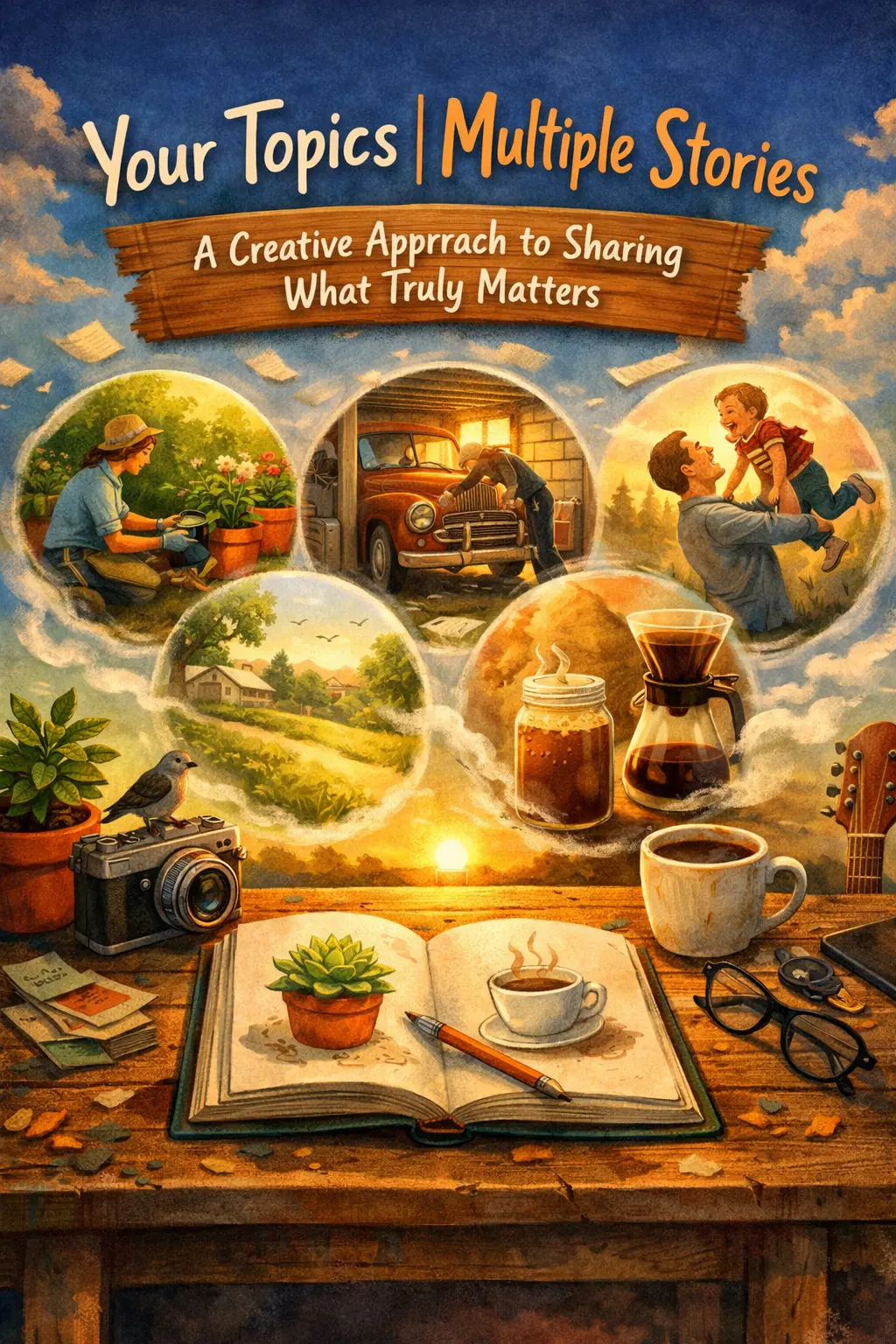
Everyone carries a subject close to their heart. It might be tending a tiny balcony garden, restoring a rusty motorcycle, parenting through sleepless nights, or mastering the smoothest glass of iced coffee. What we overlook is this: a single subject can contain endless experiences. And those experiences are what transform a casual reader into someone who keeps coming back.
For a long time, I believed I needed to “know it all” before I could write about anything. I kept waiting to feel qualified enough. That moment never arrived. One day, I simply shared a small story about the first plant I accidentally killed. People laughed. They admitted their own plant disasters. Suddenly, my simple hobby felt alive and shared. That’s when I realized something powerful: you don’t need perfection. You need honesty.
When you approach one theme from many angles, readers begin to recognize themselves in your words. It stops being a lecture and starts feeling like a conversation. Whether you’re blogging, journaling, or talking at the dinner table, this method makes your voice memorable.
What Does “One Topic, Many Stories” Really Mean?
Let’s simplify it. A topic is anything you care about or want to explore. It could be learning to cook vegan meals, fixing a dripping tap, or training a stubborn dog. A story is a real moment connected to that subject.
Put them together and you get this: instead of presenting facts, you share lived experiences. You talk about the cake that burned in the oven, the neighbor who showed you how to tighten a pipe, or the day your dog finally listened. Each memory adds depth and personality.
Imagine your topic as a whole orange. A plain fact is just saying, “It’s orange.” But a story describes the scent when you peel it, the juice that sprays onto your fingers, the first sweet bite. You can describe that orange dozens of ways, and it still feels new.
Why Stories Stick Better Than Facts
People rarely remember lists. Statistics fade quickly. But stories linger. Research shows that storytelling activates emotional centers in the brain, helping us connect and remember.
I learned this when I wrote about my fear of speaking in front of an audience. Instead of giving advice, I described the moment my voice cracked mid-sentence. Readers didn’t just read it—they replied with their own awkward stage stories. The topic shifted from being about me to being about shared experience.
That’s the strength of exploring one topic through multiple stories. You’re not delivering information. You’re creating connection.
Finding Topics Hidden in Everyday Life
Many people believe they don’t have anything interesting to write about. That’s rarely true. The most engaging topics are often small and personal.
Try this: write down five things that caught your attention this week outside of work. Maybe you wondered why sourdough starters have names. Maybe you noticed how a squirrel carefully buried food in your yard. These tiny moments are full of potential.
I once spent weeks writing about the bird feeder outside my window. I wrote about the aggressive blue jay, the cautious sparrow, and the raccoon that knocked the whole thing down. What seemed ordinary became meaningful because I paid attention.
Turning One Subject Into Many Angles
Suppose your topic is learning guitar as an adult. You don’t need one giant guide. Instead, explore smaller pieces.
What was your first lesson like? Which chord hurt your fingers the most? Did you nearly give up? Did a certain song move you deeply? Each question can lead to its own story.
Here’s a helpful exercise: write your topic in the center of a page. Around it, list ten memories, mistakes, victories, tools, or people connected to it. Those notes can become ten separate pieces of writing.
A Simple Example: Morning Coffee
Take something ordinary like morning coffee. It might seem too basic to explore. But look closer.
You could write about the mug you refuse to replace. The time you spilled coffee before an important meeting. Switching from dairy milk to oat milk. The café worker who remembers your name.
Each moment stands alone. Each moment resonates with someone else. Ordinary routines hold extraordinary detail when you slow down enough to notice.
Writing Like You’re Talking to a Friend
Great storytelling doesn’t require complicated words. In fact, simplicity works best. Write the way you speak. If a phrase feels unnatural out loud, it probably doesn’t belong on the page.
Picture someone sitting across from you at a table. You’re telling them what happened yesterday. That relaxed tone builds trust. Readers respond to warmth more than polish.
I used to rewrite my introductions repeatedly, trying to sound impressive. Eventually, I started writing the way my father tells stories at family dinners—straightforward and slightly imperfect. That honesty made my writing stronger.
Overcoming Common Doubts
You might worry that your stories aren’t important enough. Or that someone else has covered the topic better. Those doubts are common, but they aren’t useful.
Your experiences are uniquely yours. No one else has your perspective. Some stories will be light. Some will be thoughtful. Some will simply describe a small daily mishap. All of them matter.
One practical trick: set a timer for fifteen minutes and write without editing. Don’t stop to fix mistakes. Let the first draft be rough. You can refine it later.
Keeping Your Ideas Organized
When you begin collecting stories, organization helps. Use a single folder—digital or physical—to store everything. Even a one-sentence idea deserves its own note.
Group your stories by topic. For example, under “gardening,” you might have notes titled “tomato disaster,” “first bloom,” or “battle with squirrels.” This makes it easy to revisit and expand on them later.
Capture ideas immediately. Inspiration fades quickly if you rely on memory.
Using Stories Beyond Writing
This approach isn’t limited to blogs or journals. It works in everyday conversation. At work, sharing a short experience can explain a lesson better than a presentation slide. At home, telling the story behind a family tradition strengthens bonds.
Recently, a neighbor explained why he always parks his truck facing a certain direction. His father once told him it prevented morning glare. That small explanation changed how I saw him. Stories reveal layers of identity.
Inviting Others Into the Conversation
Your stories become richer when you include other voices. Ask friends or family how they remember the same event. You might discover entirely different perspectives.
Interview someone about their first job. Ask a coworker about their longest commute. Collect these stories. When you weave them together, your topic becomes more dynamic and meaningful.
Frequently Asked Questions
How do I choose a starting topic?
Begin with something you naturally enjoy thinking about. Curiosity fuels consistency.
What if I feel like I’ve run out of ideas?
New experiences create new stories. Everyday life constantly provides fresh material.
Do I need formal writing skills?
Observation matters more than technical skill. Improvement comes with practice.
Can this approach work for business topics?
Yes. Professionals can share client experiences, lessons learned, and behind-the-scenes moments to build trust.
How long should a story be?
Between 300 and 600 words works well. Long enough to create imagery, short enough to keep attention.
What about criticism?
Not everyone will connect with your style. Focus on those who do.
Start Today
You don’t need a detailed plan. Choose one subject. Open a blank page. Begin with this line:
“I didn’t expect to care about this, but then something happened.”
Let the memory unfold. Keep writing until the moment feels complete.
One topic can hold countless stories. And somewhere out there, someone will recognize themselves in yours.
